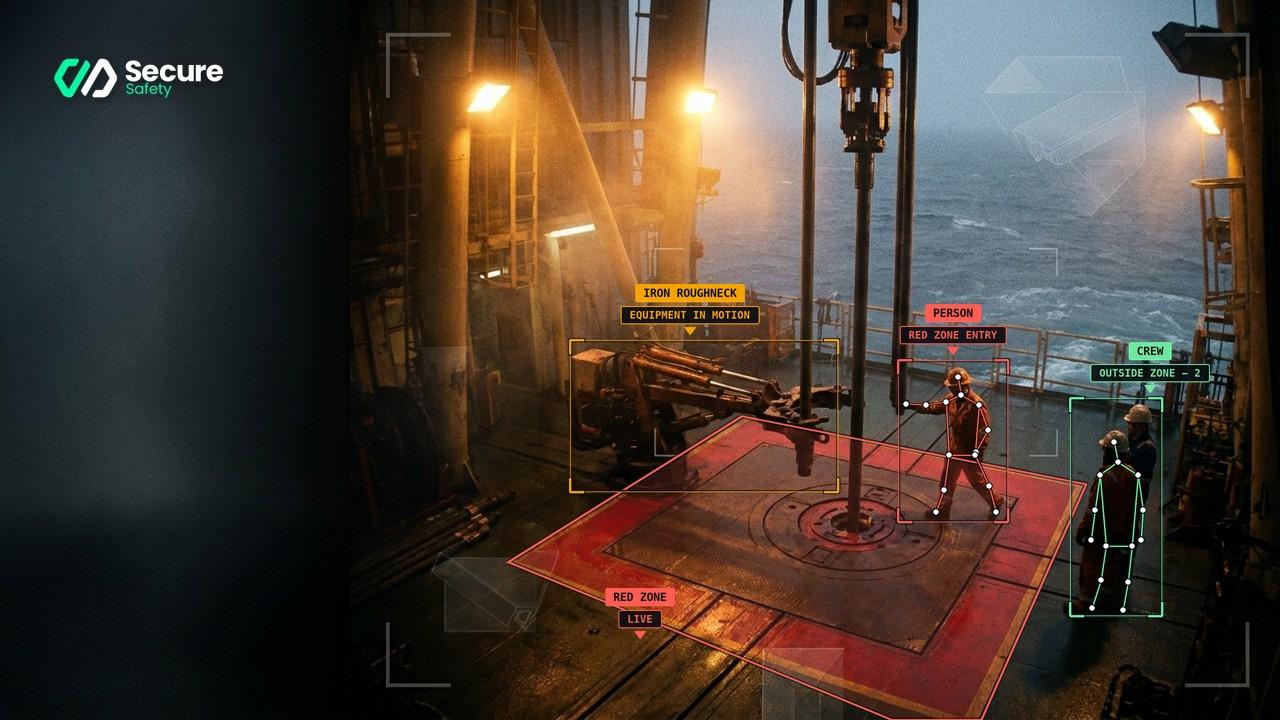
Every drill floor has a red zone. It is the area around the well centre where pipe, the top drive, the iron roughneck and the pipe-handling equipment move, and where a person who is in the wrong place at the wrong moment can be struck or crushed. Most rigs mark it with red paint and control it with a procedure: nobody goes in while equipment is moving unless the driller has agreed it.
The paint and the procedure are both necessary. Neither can tell you how often the line is actually crossed.
What red zone encroachment means
Encroachment is a person entering the red zone when they should not be there. That usually means one of three things:
- The zone is live. Equipment is moving, or about to move, and someone steps in.
- Too many people are inside. The task allows two, and there are four.
- They stay too long. A job that needs thirty seconds at well centre turns into five minutes.
None of these is unusual. Drilling is full of moments where someone has a good reason to step in: to guide a tool, clear a snag, check a connection. That is exactly why encroachment is hard to manage. The line is crossed for legitimate reasons many times a shift, and the unsafe crossings look almost the same as the safe ones.
Why the rig floor keeps hurting people
Industry incident statistics have shown the same pattern for years. The rig floor is the most common place for a lost-time injury on a drilling rig, and the leading causes are being struck by something or caught between two things. Those are red zone injuries.
The reasons are not mysterious:
- The driller cannot see everything. The view from the driller's cabin is blocked by pipe, equipment and other people. Blind spots are built into the layout.
- Mechanised equipment moves fast and quietly. A modern pipe handler does not announce itself the way a crew on manual tongs did.
- Habit wears the line down. A crew that has stepped in a thousand times without harm stops noticing that it is stepping in.
- Nobody is counting. Observation cards record what someone happened to see and chose to write down. They do not measure how often the zone is entered.
That last point matters most to anyone who owns the procedure. You can write a clear red zone rule, brief it at every pre-tour meeting and audit it twice a year, and still have no figure for how well it is followed on a Tuesday night shift.
What a camera can do that paint cannot
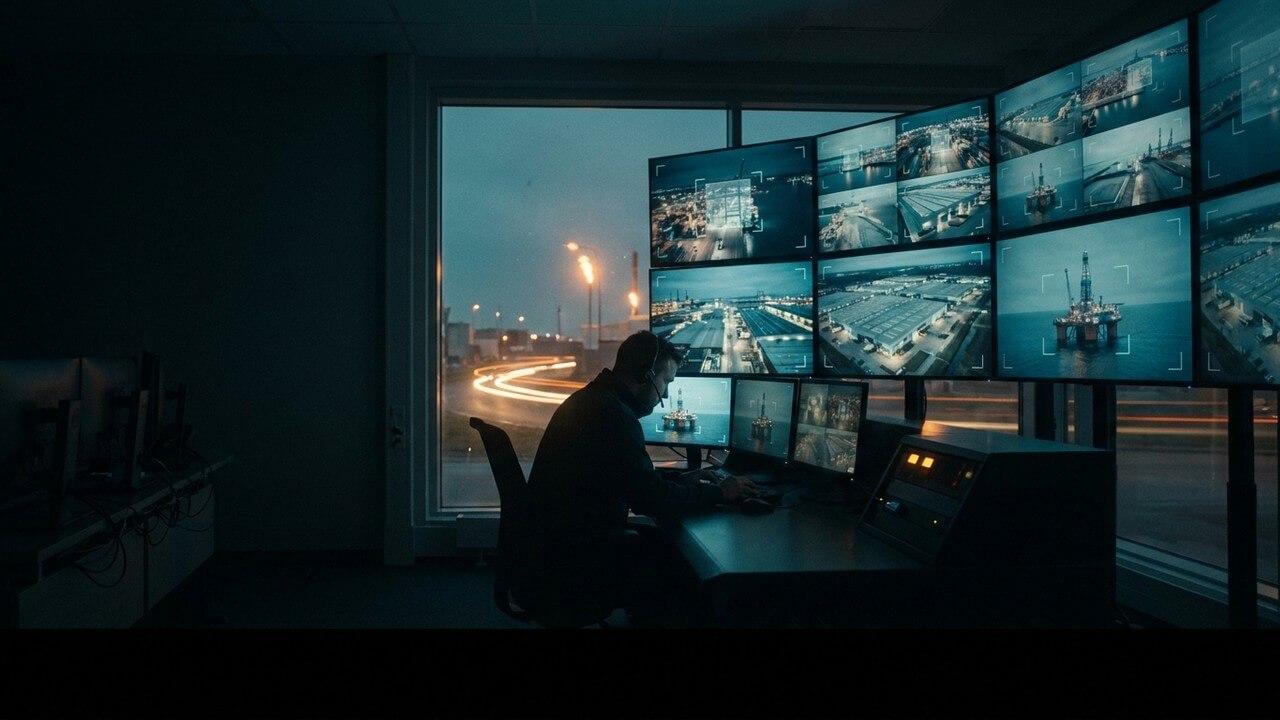
Most drill floors already have CCTV. The cameras are there so the driller and the supervisors can watch the operation, but nobody can watch every screen for twelve hours. Computer vision can.
An AI layer on those existing cameras does four things:
- Detects a person in the zone while it is live. Equipment movement defines when the zone is dangerous, so the zone is dynamic: stepping in while the floor is still is treated differently from stepping in while pipe is moving.
- Counts heads against the limit. If the task allows two people at well centre, the third is flagged.
- Measures time at risk. Minutes spent inside the zone, by person-count, by shift and by operation.
- Keeps the clip. Every event is stored with its video, so the review is about what happened and not about whose memory is right.
The alert is the least important of these. What changes behaviour is the record. When a crew can see that tripping pipe puts three times as many people in the zone as making a connection, the conversation at the next toolbox talk is specific.
What makes it work on a real drill floor
A system that works in a demo can still fail offshore. Four things decide it.
False alarms. A crew that is interrupted for nothing learns to ignore the system within a week. The detection has to stay quiet when nothing is wrong, in rain, spray, glare and floodlight. We wrote about what it took to get there in what offshore taught us about safety AI.
Knowing the operation. The same position on the floor is safe during one task and dangerous during another. The zone rules have to follow the operation, not a fixed outline drawn once.
Where the video is processed. An offshore asset has limited bandwidth and strict security. The analysis should run on a server on the rig, on the cameras already installed, without new hardware on the drill floor.
How the crew is treated. Monitoring that is used to blame individuals will be resisted, and rightly. The useful question is why the task keeps putting people in the zone, not who was standing there. Brief the crew and the safety reps before anything is switched on, and focus on the behaviour, not the person.
A sensible way to start
You do not need every analytic on day one. Start with the red zone alone: entries, headcount and time in the zone. Run it quietly for a few weeks so the figures can be checked against the video before any alert reaches the crew. Then decide what to add: people under a suspended load, hands near pinch points, open holes in the floor.
The first result is often a surprise: the zone is entered more often than anyone believed, and most of the entries come from one or two operations. That is the starting point for changing the task, which is where the real risk reduction comes from. For the wider picture beyond drilling, see our guide to restricted-zone monitoring.
A painted line tells people where the danger is. It takes a measurement to tell you whether they are staying out of it.
See what your drill floor cameras have been missing — book a demo.